We are developing low-cost, nature-based wastewater treatment solutions to bring our rivers back to life.
Learn About:
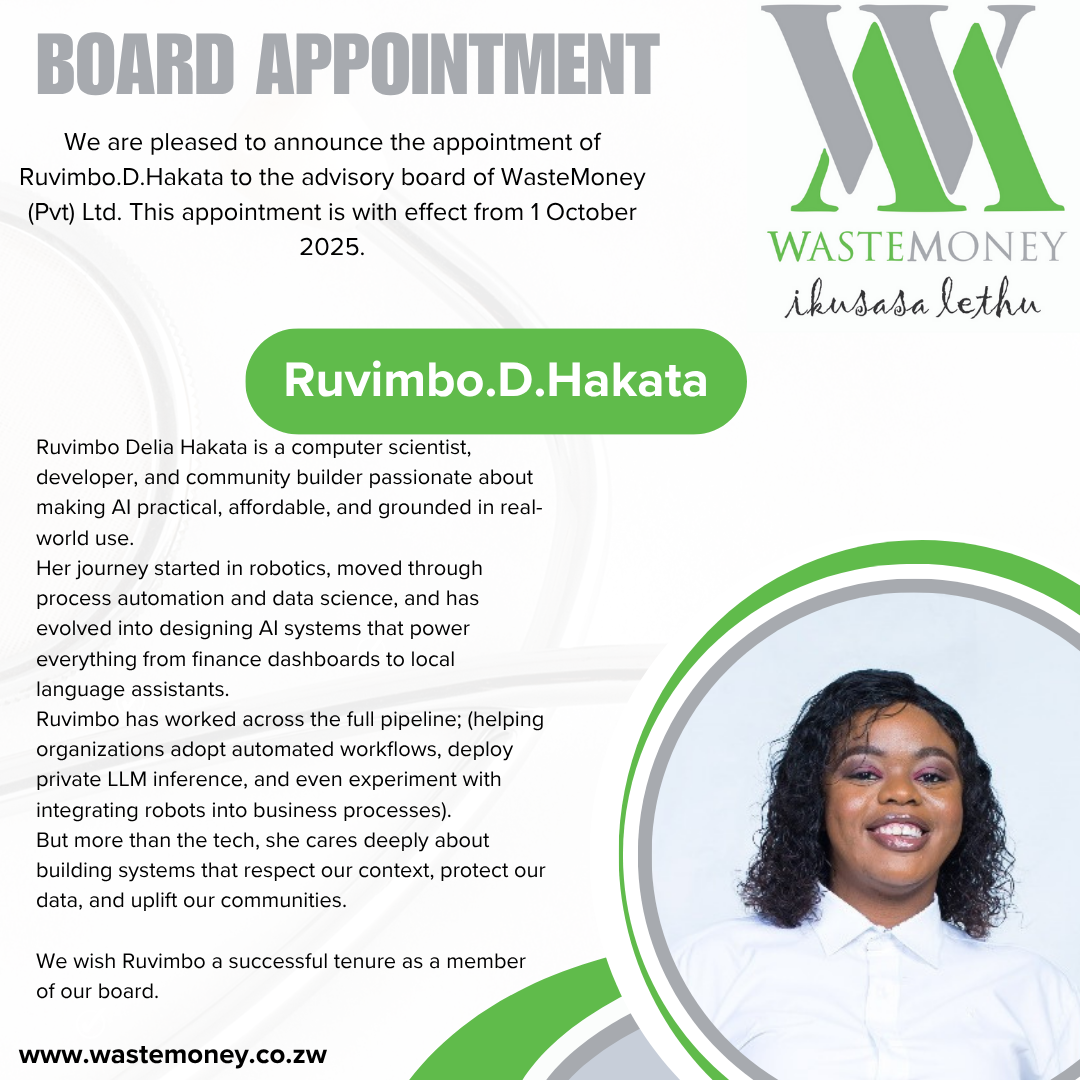
Mthokozisi Mzingaye Moyo
WasteMoney
WasteMoney (Pvt) Ltd was founded in 2018 by Mthokozisi Mzingaye Moyo with the mandate to address the water, energy and food challenges faced in Zimbabwe. The solutions were to be derived from what was commonly deemed as waste by society hence the name ‘WasteMoney.
WasteMoney envisions a future where cities and rural communities no longer see wastewater as a burden but as a renewable asset. Through water credits, biochar production, and nature-based solutions, we aim to regenerate landscapes, reduce pollution, empower youth enterprises, and create a self-sustaining circular economy. Our vision is a cleaner, climate-resilient Africa where green innovation creates jobs, protects water sources, and strengthens the well-being of all.
Conventional Wastewater treatment plants are costly
Growing Population
Increased strain on treatment plants
Aged Infrastructure
Leading to inadequate waste water treatment
Waste water is characterised by the potential to cause life threatening conditions due to the bacteria and viruses from faecal matter. The poor disposal of wastewater has seen Cholera and Typhoid claiming lives in many African countries.
With creating a circular economy in water becoming more pertinent, WasteMoney sees the need to accelerate the development of home grown solutions in the treatment of waste water and methods to reclaim polluted water bodies. Our long term goal is to provide municipals and industry with tailor made nature based waste water treatment solutions which are passive and have a low energy demand such as Reed beds and solar powered UV treatment solutions. The water can then be reused for making the CBD green to cool the heat island that forms in the city centre.
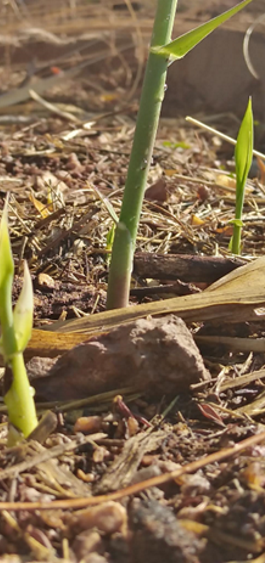
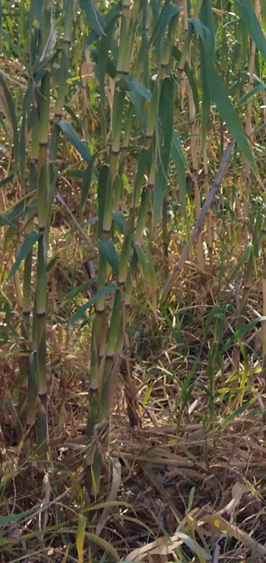
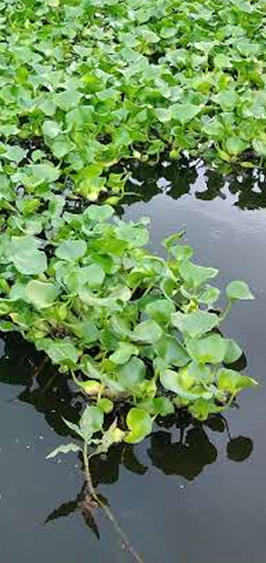
Reeds beds (also known as artificial wetlands) are an example of a Nature Based Solution (NBS) which is used to treat water through Phytoremediation. The reeds remove, transfer, stabilize and/or destroy contaminants in the water. As compared to other waste water treatment options such as Return Activated Sludge (RAS), reed beds do not require a lot of energy and the maintenance costs are low. This makes the technology ideal for an African setup where capital to invest in high sewer treatment is not readily available.
Type of a constructed wetland form and form of nature based solutions.
UV Light Treatment
High energy beam of light
(UV-C) destroys DNA
structure of microbes.
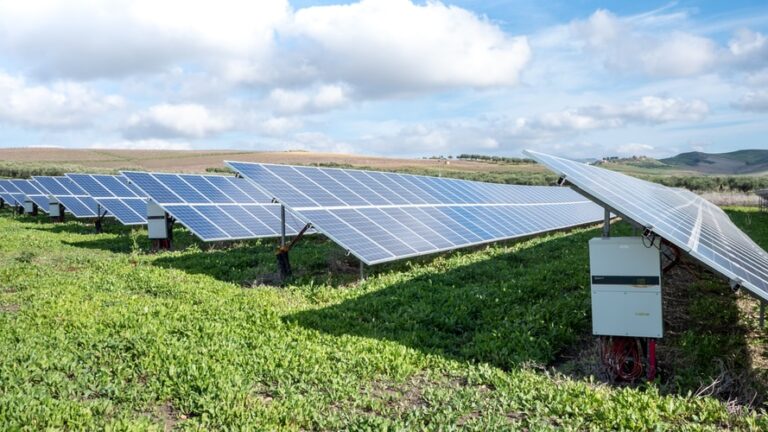
UV light, especially UV-C which has a wavelength of 220 to 290 nm, as a disinfectant, kills microorganisms such as bacteria by damaging their DNA, making them unable to reproduce. In photolysis it can be used for direct breakdown of different compounds and chemicals, and in Advanced Oxidation Processes UV light is used together with an oxidizer such as hydrogen peroxide to break down tougher, persistent, and more complex compounds. Using solar power makes the system more cost efficient and ideal for decentralized waste water treatment.
Progress to date
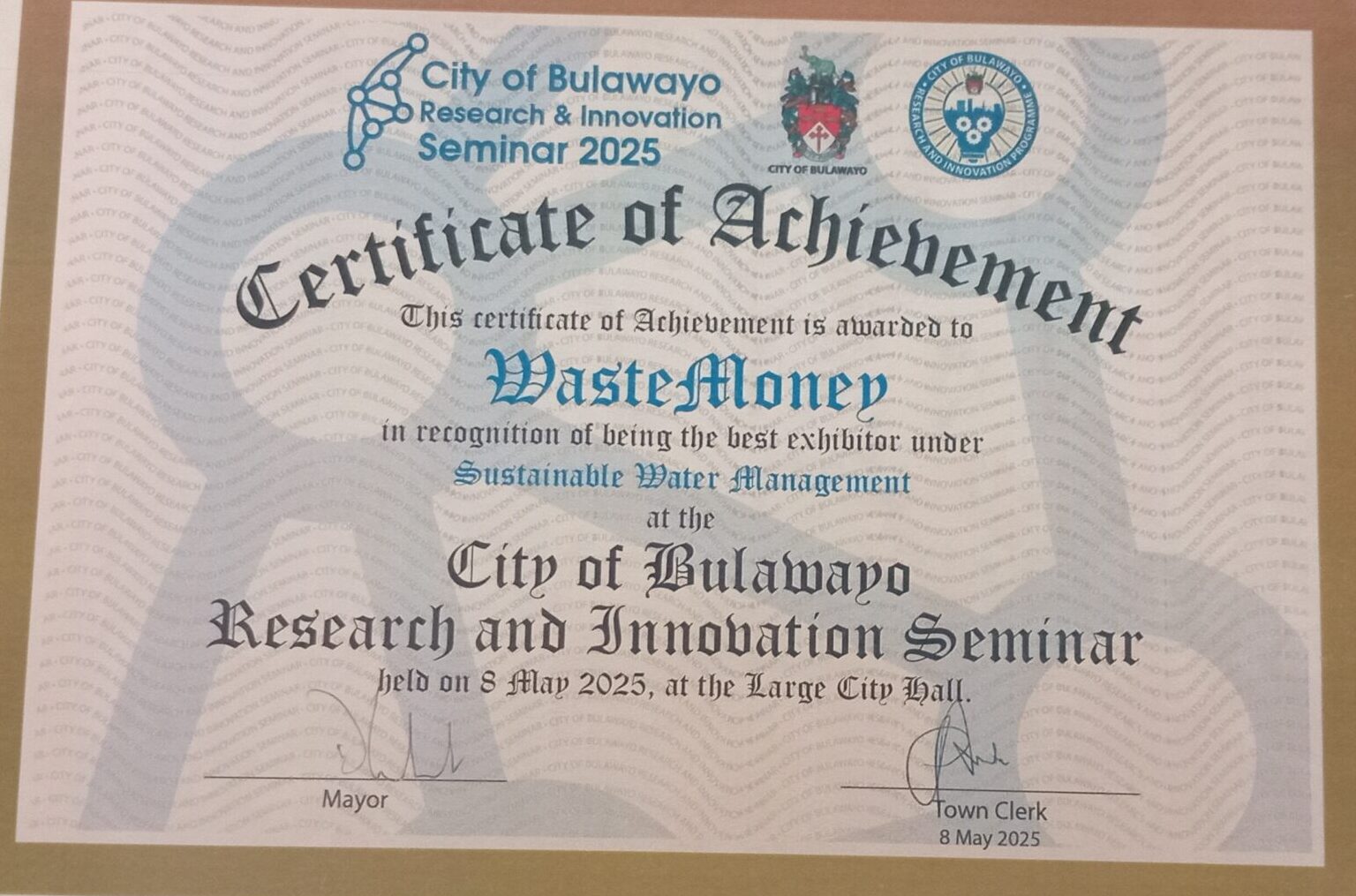
Awarded Best Exhibitor Under Sustainable Water
Management (City of Bulawayo Research & Innovation Seminar 2025).